First World War-related street names

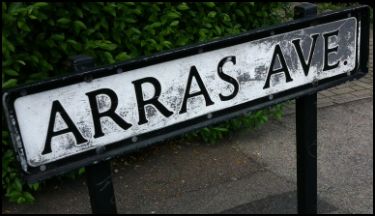
Near where I work there is an ‘Arras Avenue’ and that got me wondering about how many other First World War-related street names there are in the country. Thanks to the wonders of the internet, the answer is, lots! According to www.streetmap.co.uk there are at least ten other roads with ‘Arras’ in their name. Place names and battles are quite prevalent; some of the others I found include:

Aisne – 6
Cambrai – 7
Delville – 5
Flers – 2
Gallipoli – 2
Jutland – 23
Kemmel – 3
Marne – 23
Menin – 9
Messines – 2
Mons – 22
Somme – 6
Verdun – 16
Vimy – 9 (including two ‘Vimy Ridge’)
Ypres – 6

There are also:

Anzac – 5
Cavell – 36
Sopwith – 21

Unsurprisingly the commanders and generals also feature heavily:

Allenby – 49
Birdwood – 12
Byng – 22
Cavan – 11
Charteris – 11
Chetwode – 18
Currie – 13
Gough – 35
Haig – 81
Jellicoe – 36
Joffre – 2
Kitchener – 69
Plumer – 8
Rawlinson – 23
Smith Dorrien – 1
Trenchard – 51

Perhaps the award for the most WW1-related names goes to Broadstone in Poole, which has an Allenby Road, Cavan Crescent, Chetwode Way, French Road, Gough Crescent, Kitchener Crescent , Milne Road, and Plumer Road among others – but interestingly no Haig.

The numbers may be indicative of public opinion towards the generals after the war; it would also be interesting to know how many relate to areas where ‘homes for heroes’ were built. I am sure there are also many more out there – VC winners, war poets, regiments etc. So look out for one next time you are out and about!

Posted in WW1 | Tagged | 1 Comment

The Surrey Regiments in the First World War

The Surrey Regiments in the First World War

My research into the men named on the Carshalton war memorial has focused quite heavily on the wartime experiences of the two Surrey regiments. 37 of the men from Carshalton who lost their lives were in the East Surrey Regiment (predominantly in the 1st, 2nd, 7th, 9th and 13th Battalions), and 38 in The Queen’s (Royal West Surrey Regiment), mainly in the 1st, 2nd, 6th and 7th Battalions. Together they account for nearly a third of all the men on the memorial; not surprising really considering that these were the ‘local’ regiments.

Both regiments saw extensive service during the war, their battalions seeing action on the Western Front, Gallipoli, Italy, Salonika, Egypt, Mesopotamia and Palestine. In total 44 battalions saw active service, their battle honours covering most of the major actions of the war. Casualties were heavy – the East Surrey Regiment suffered over 6,500 and The Queen’s over 8,500. The 1st Battalion of The Queen’s, for example, had only 32 men fit for duty by the beginning of November 1914 out of a strength of nearly 1,000 who had landed in France in August. Nine Victoria Crosses were awarded to men of the two regiments during the war. Perhaps the most well known is Private Edward Dwyer, 1st Battalion East Surrey Regiment, who was awarded his VC after the action at Hill 60 on 20th April 1915. Popularly known as the ‘Little Corporal’, although he survived that action he was killed during the Somme offensive the following year. Probably the most well-known story about a Surrey battalion during the war is that of Captain ‘Billie’ Nevill of the 8th East Surreys, who encouraged his men to dribble footballs across no man’s land on the opening day of the Somme. Nevill was killed leading the attack; total casualties in the battalion (killed, wounded and missing) totalled 446.

There are a number of excellent resources for those studying the Surrey regiments. The war diaries for both regiments are available free online as pdf documents, a most valuable resource. The ability to specify the battalion, date, month and year that you are interested in is most convenient. Regimental histories for both are also available from Naval & Military Press. The Surrey History Centre holds many of the regimental records, and the regimental museum at Clandon also has some interesting displays.

In future blog entries I hope to examine further the experiences of the battalions in both regiments and post information about some of the individuals and actions that have caught my eye.

Posted in Surrey Regiments, WW1 | Tagged , , , | Leave a comment

Searching for William MacDuff – Part 2

Having found out details of my great-great uncle William MacDuff’s war service, I was now keen to find out more information about how he had died. The 11th Border Regiment war diary entry for the day was very brief; more recent histories of his regiment (The Border Regiment in the Great War) and battalion (‘The Lonsdales’ by Colin Bardgett) shed no further light on the action either. Everything I read indicated that the Passchendaele offensive had ended on 10th November 1917 when the Canadians captured the village, so why had William been killed in action in this area?
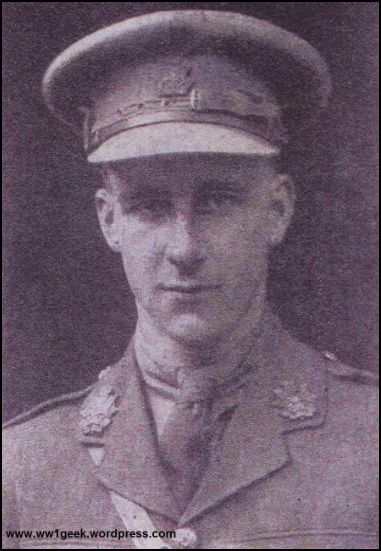
An obituary in the local paper where William’s family lived also added some more details – it stated that he had been a bank clerk in Scotland before securing a similar position in a bank in Canada. It also said that he had been instantaneously killed by a machine gun bullet whilst leading his platoon in an attack. It named the bank he had worked for – a quick Google search later and I found that they still existed and even had an archive department. I sent them an email and was amazed when they replied stating they had some information about him. I eagerly awaited their package in the post. When it arrived it contained details of William’s employment with the bank, with the explanation that apparently Canadian banks actively recruited from Scotland well into the 1950s due to similarities of the banking systems, the Scots’ work ethic, and their ability to deal with the harsh Canadian winters! Also in the package was a picture of William in his military uniform. Being able to see what he looked like really brought his story to life.

Still trying to track down further details of the action in which William died, the breakthrough came when I returned to the National Archives to examine the Brigade and Divisional records. The Lonsdales had been part of the 97th Brigade, 32nd Division, and both files contained extensive records and maps of the information. It transpired that William’s battalion had been part of an attack to consolidate the position north of Passchendaele and capture the remaining high ground on the ridge. The attack had been made on a moonlit night; trying to achieve the element of surprise, the troops advanced without any artillery support until zero +8 minutes. However soon after the attack started the German machine guns opened fire causing many casualties – possibly including William. Although the Battalion succeeded in reaching their objective, they suffered high losses, including most of their officers, and were driven back by German counter-attacks. A final discovery was an aerial photo of the area taken shortly before the attack, showing a morass of mud and shell holes.

Soon after this discovery I found out that a PhD student at the University of Birmingham was writing his thesis on this very action. He very kindly gave me a copy of his thesis once it had been marked, and from this and further conversations with him, I learned that this had actually been a fairly significant action, involving ten battalions from two divisions. The whole attack had failed, and over 1,600 casualties were suffered by the British. However despite these losses, the attack has effectively been written out of the official history of the war. On a more general note his thesis is an excellent account of the amount of detail and effort that went into preparing for an attack of this kind, and I learned a great deal from it.

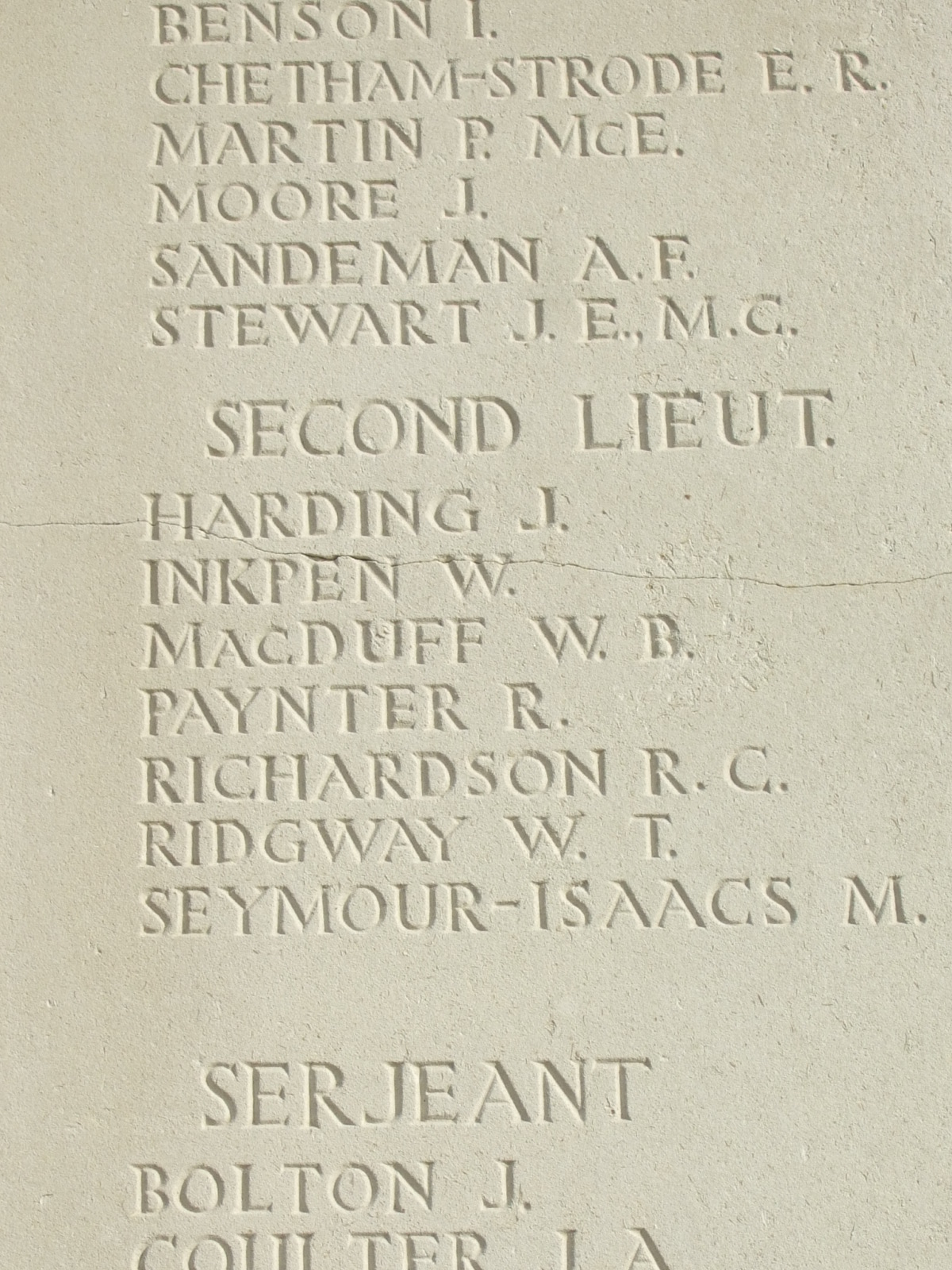
In November 2011 I travelled to Ypres for Armistice Day. For me it was a very poignant journey – over the course of three years I had gone from finding out I had a relative who had been killed in the war, to uncovering full details of his service, putting a face to the name, and ultimately learning about how and where he had lost his life. I visited Tyne Cot Memorial to the Missing, where William is commemorated along with nearly 35,000 other servicemen whose bodies were never found, to pay my respects.

Hopefully this is not the end of William’s story, and I can now make sure that my family does not forget him. During my search for William I have learned a great deal about researching soldiers from the war, and have ultimately developed a deep-rooted interest in remembrance and ensuring that these men who laid down their lives are never forgotten.

Posted in WW1 | Tagged , , , , | 6 Comments

Searching for William MacDuff – Part 1

It was only in early 2008 that I found out that I had relatives who had served in World War One. After my grandmother died I belated decided to look at my family tree. My mother dug out a tattered photocopy of a tree, faded and barely readable. It transpired that my great uncle had put this information together, diligently researching his ancestry in the days before the internet. One part that I could read immediately stood out – “William Brown MacDuff, b. 1893, d. Gt War 1917”. I was amazed – despite my interest in history I had never thought to ask, and no one had ever thought to tell me, that we had ancestors who had served in the war, let alone who had died.

I bombarded my mother with questions – she vaguely recalled that her Grandmother’s brother had been killed, but also that her grandfather had been in the army, and her great-grandfather was referred to as ‘the Colonel’. Stunned into action, I immediately set out to find out about these men.

My first port of call for William MacDuff was of course the Commonwealth War Graves Commission. I quickly found his entry. “Enlisted in 1915 in Canada, Canadian Expeditionary Forces. Gazetted to Black Watch 1917.” This immediately raised more questions – what was he doing in Canada? If he had been gazetted to the Black Watch, why was he with the Border Regiment when he died?

His medal index card gave a bit more information – it showed he had risen through the ranks and been commissioned on 28th August 1917, and was killed in action on 2nd December 1917. Shortly after I discovered that Canadian attestation records are available online, and looked up William’s papers. These told me that William had been a bank clerk; he had enlisted in June 1915 in Calgary, three days after his 22nd birthday, and had experience in the Territorial Force. I ordered his full service record from the Canadian archive and from these papers learned that he had arrived in England in 1916, where he was attached to the Pay Office (not surprising really given his banking experience). Perhaps disillusioned with his non-combatant role, he applied for a commission in the British Army, and embarked on officer training in May 1917.

Searching the London Gazette helped me to understand the discrepancies over which regiment he had served with. After his officer training he was commissioned to the 5th Battalion, Border Regiment. However, it appears he never joined them. Instead he was attached to the 11th Battalion (The Lonsdales), and in November he was commissioned to the Royal Highlanders (The Black Watch).

I also visited The National Archives and looked at William’s British service record and the war diary for the 11th Border Regiment. His service record showed he stated a preference for joining the Black Watch – I later learned his father served as a Lieutenant Colonel with the regiment. However he never got his wish of joining the regiment. The war diary entry for the day William died was frustratingly brief: “The battalion made a night attack on the German positions south of Westroosebeek in conjunction with remaining units of 97th Infantry Brigade and two units of the 96th Infantry Brigade. Zero hour 1.55am.The battalion took its objectives but the two leapfrogging companies fell back before dawn onto subsidiary objectives which were held all day until the enemy launched a counterattack at 4.30pm and the battalion fell back onto the old line. Casualties for the whole action [included] 2nd Lt MacDuff killed.”

However I still wanted to know more about William’s life, and ultimately his death.

Posted in WW1 | Tagged , , , , | 2 Comments

Australia on the Western Front

What better way to kick off my blog than to talk about my recent visit to the Somme. Last time I went there I had the luxury of five days spent on the battlefields, walking the ground the troops attacked over and getting a real sense of the area and the landscape.

Unfortunately on this occasion I could not justify spending so much time away from work, and had been looking for a shorter trip. This I found in a day trip offered by Battlefront Explorations, led by Steve Garnett, a former history teacher with a lifelong interest in the First World War.

The trip is titled ‘Australia on the Western Front, 1916-1918’. My knowledge of the Australians during WW1 is very limited, so I thought it would be a good trip to expand my knowledge as well as an opportunity to return to some of the more well-known sites in the area.

After an early start and a quick trip on the Eurotunnel, we arrived in France to clear blue skies. Our first stop was actually north of the Somme, at Fromelles. Here the Australians and British attacked on 19th July 1916, in what was supposed to be a diversion to prevent the Germans sending reinforcements south. The attack took place in broad daylight, and Steve showed us the position of the ‘Sugar Loaf’, a German salient which commanded excellent views across the open ground. The attack failed, and cost the Diggers dear with over 5,500 casualties. The day has been described as “the worst 24 hours in Australia’s entire history”.

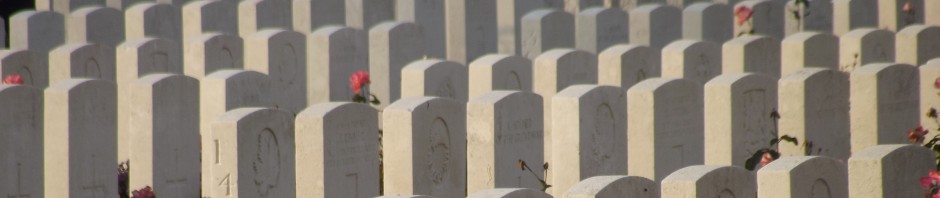
Also in the area we visited Le Trou Aid Post cemetery, a picturesque cemetery surrounded by a moat and maintained to the CWGC’s normal high standards, V.C. Corner Australian cemetery and memorial, and The Cobbers memorial. A short drive into the village of Fromelles itself saw us at the newest CWGC cemetery, Fromelles (Pheasant Wood), where the remains of Australian and British soldiers recovered in 2009 are now buried.
We then headed down to the Somme itself, arriving in time for a hearty lunch at the ‘Ocean Villas’ tearooms, included in the cost of the trip. Fuelled for the afternoon, our first stop was Serre Road cemetery No.2, the largest Commonwealth cemetery in the area. From there we proceeded to Newfoundland Park; Canadian in focus rather than Australian but a worthwhile stop due to its preserved trench system.

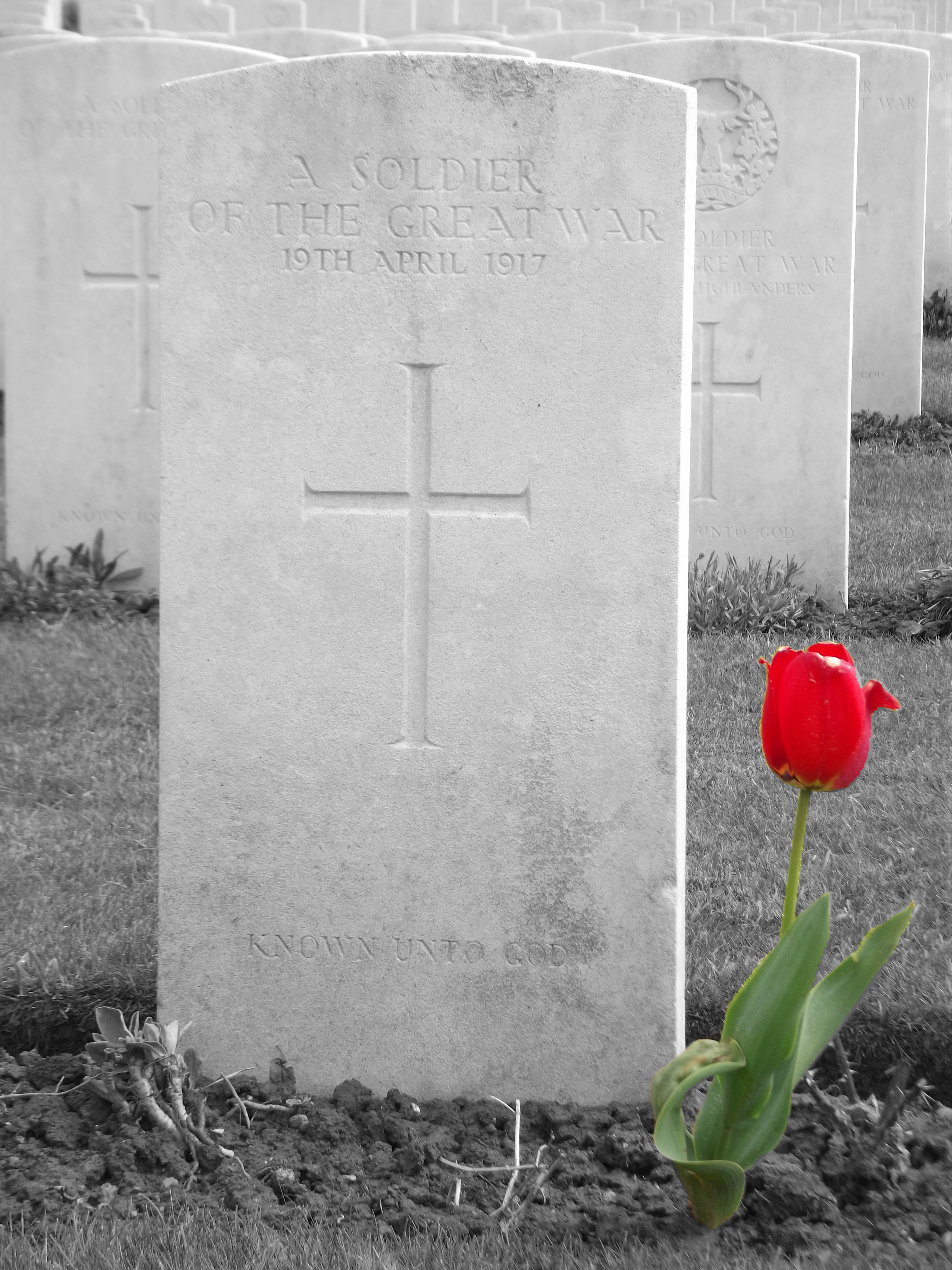
Thiepval memorial to the missing is a must-see on any trip to the Somme, and our visit there gave me the chance to pay my respects to the 39 men from Carshalton who are commemorated on its panels. The sheer size of the memorial never ceases to amaze me, the 72,000 names it displays testament to the devastating effect of the war.
From Thiepval we drove to Pozieres, another site of significance for the Australians. They attacked the village on 23rd July 1916 and although successful, suffered heavily from a German artillery bombardment on the 24th. Further assaults by the Australians throughout the rest of July, August, and into early September saw them reach the German position at Mouquet Farm. During this period they incurred 23,000 casualties. Standing today on the site of the German ‘windmill’ strongpoint, looking towards Mouquet Farm, it is hard to believe that it took the troops six weeks of bitter fighting to capture the ground that we had driven in just five minutes. The Australians in our party seemed genuinely shocked to learn about the casualty rates and slow progress, having little knowledge previously of their country’s key role in this campaign.

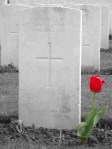
We saw the graves of some of these men at Pozieres British Military Cemetery, including that of Major D. Chapman of the 45th Battalion, Australian Infantry; the first man ashore at Gallipoli, he survived that campaign only to lose his life during the fighting in August 1916.

Our final visit in the area was to Lochnagar crater, created when the British blew a mine filled with 24 tons of ammonal on 1st July. Evident in the area is the work of the La Boiselle Project, a team of military historians currently excavating the tunnel systems in the area.

A 25 minute drive saw us reach our final stop of the day – the Australian National Memorial at Villers-Brettoneux. This impressive monument shows the names of over 10,000 Australian missing. We were lucky that we were able to get up to the top of the tower, which commands excellent views towards Amiens, which the Australians helped to defend during the German Spring offensive in 1918.

We arrived back in London at 11pm; a long day but very worthwhile. Although we encountered hardly any other visitors at the sites we visited, evidence of the recent ANZAC Day commemorations was apparent. I learned a great deal from Steve and can highly recommend his trips. His knowledge and passion for the subject shone through, and he expertly dealt with the many diverse questions thrown at him. Future trips are scheduled for the first Saturday of every month and at £80 per person, including lunch and an informative booklet covering the sites visited, offer excellent value. Further information can be found at www.battlefrontexploration.co.uk
Posted in Battlefield tours, WW1 | Tagged , , , , , , | 2 Comments